
 By Philip
What does it take to turn legal battles into lasting social change? For over three decades, one organization has answered this question by merging courtroom strategy with grassroots action. Founded in 1990 under the leadership of Jim Harrington, this group has become a cornerstone in the fight for equality across the Lone Star State.
At its core, the initiative focuses on protecting marginalized communities through impactful litigation and policy reform. By tackling systemic barriers in voting access, criminal justice, and immigrant rights, it empowers individuals while reshaping institutions. Its work proves that law isn’t just about rules—it’s a catalyst for progress.
What sets this effort apart? A dual approach: legal expertise paired with community-driven campaigns. From securing voting protections to challenging discriminatory practices, victories here ripple far beyond courtrooms. Each case strengthens the belief that fairness isn’t an abstract ideal—it’s a right demanding relentless defense.
Today, the organization remains vital, adapting to new challenges while staying rooted in its mission. Through education, litigation, and partnerships, it continues to bridge gaps between policy and lived experience. This isn’t just about winning cases—it’s about rewriting what’s possible.
Key Takeaways
- Founded in 1990, the organization combines legal action with community engagement to drive systemic change.
- Focus areas include voting rights, criminal justice reform, and protections for immigrant communities.
- Historic litigation successes have reshaped policies affecting millions of Texans.
- Leadership under Jim Harrington established a blueprint for merging advocacy with practical solutions.
- Current initiatives emphasize both courtroom strategies and public education to sustain long-term impact.
Discover Our Legal Advocacy & Services
Empowering communities starts with robust legal support and accessible services. By merging courtroom expertise with public education, this initiative creates pathways for lasting equity. Legal teams work tirelessly to dismantle barriers in voting access, racial equity, and disability inclusion—ensuring fairness isn’t theoretical but actionable.
Overview of Legal Services and Support
Attorneys here specialize in high-impact cases that reshape systems. They challenge discriminatory policies, defend voter protections, and advocate for marginalized groups. Behind every lawsuit lies a strategy to hold institutions accountable while amplifying community voices.
Key focus areas include:
- Fighting voter suppression through litigation
- Advancing racial justice in policing and education
- Securing accommodations for disabled individuals
Donation Options and How to Contribute
Supporting this work is straightforward. Contributions fund critical lawsuits, outreach programs, and policy research. Flexible giving options ensure everyone can participate:
| Donation Type | Method | Details |
|---|---|---|
| Recurring Gifts | Online Portal | Monthly/quarterly contributions |
| Stock Donations | Brokerage Transfer | Tax benefits, contact finance team |
| Check Donations | Mail to 4925 N Lamar Blvd, Austin | Include EIN 74-2764406 |
Employer matching doubles your impact. Every dollar strengthens efforts to build a more just system through legal advocacy and education.
Understanding the texas civil rights project Legacy
Rooted in the struggles of South Texas farm laborers, a bold legal initiative took shape in 1990. Attorney Jim Harrington channeled lessons from defending Cesar Chavez’s United Farm Workers into creating an enduring force for equity. This effort grew from securing basic protections—like pesticide exposure warnings—into a statewide beacon for fairness.
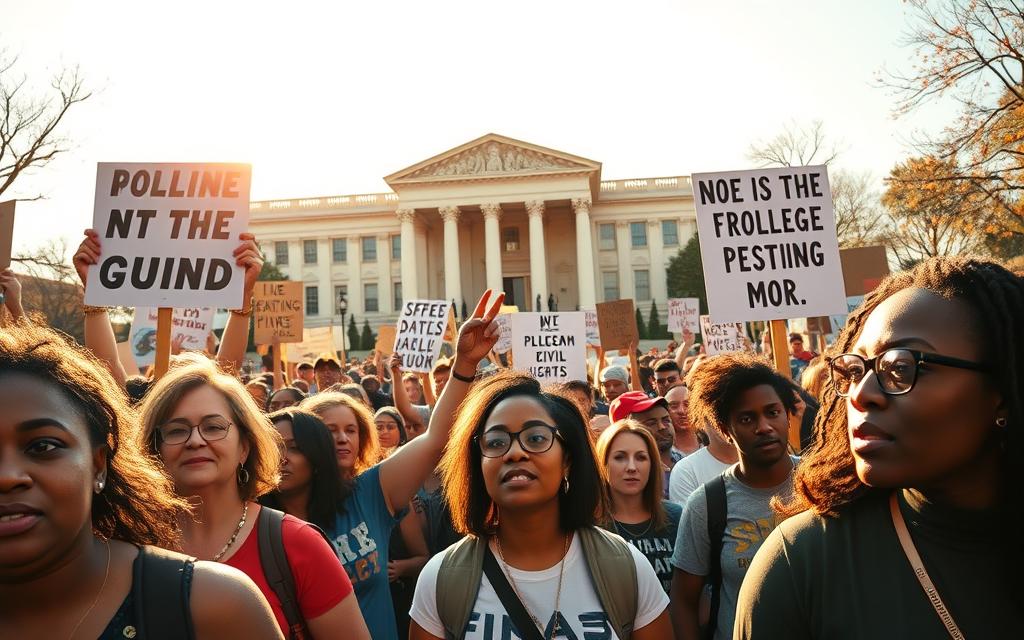
History and Founding Story
Harrington’s memoir reveals how 18 years as Chavez’s counsel shaped his approach. Early campaigns focused on rural workers denied unemployment benefits and healthcare access. These battles laid groundwork for systemic reforms, blending courtroom strategies with community organizing.
By 1995, the initiative expanded beyond agricultural issues. It addressed voting barriers and police accountability, becoming a trusted resource for marginalized groups. Its Rio Grande Valley origins kept grassroots needs central to every case.
Key Programs and Legal Victories
Landmark lawsuits define this legacy. A 2021 challenge to Senate Bill 1 united advocates like ACLU and AALDEF. Federal courts later struck down provisions restricting voter assistance—a win for disabled citizens and non-English speakers.
Critical programs include:
- Criminal justice reforms reducing discriminatory sentencing
- Disability rights cases ensuring ballot access
- Education equity efforts in underserved schools
Recent rulings in 2023-2024 reinforced mail-in voting protections, proving impact litigation can reshape democracy. Through these efforts, the movement continues bridging gaps between law and lived experience.
Community Impact & Advocacy for Justice
Legal victories create ripples that transform lives far beyond courtrooms. Through strategic action and grassroots partnerships, advocates dismantle barriers while empowering those often unheard.
Significant Litigation Milestones and Influences
A 2018 lawsuit forced major cities to overhaul police accountability measures. This case required body cameras and bias training—protecting vulnerable groups from excessive force. Another landmark ruling in 2022 ensured polling stations provided language assistance for non-English speakers.
Key achievements include:
- Securing ADA compliance in 15 South Texas school districts
- Overturning housing policies that discriminated against families
- Winning reparations for women subjected to workplace harassment
Movement for Social Change and Policy Reform
Courtroom wins spark broader shifts. After challenging unfair bail practices, lawmakers revised pretrial detention rules statewide. Advocates also influenced new laws protecting voters with disabilities.
Collaborations with local leaders turned legal precedents into actionable policies. These efforts address systemic gaps in education, healthcare, and employment.
Engaging Communities Across Texas
Workshops in Austin, Houston, and San Antonio teach residents how to document discrimination. Bilingual legal clinics in South Texas help families navigate complex systems.
Volunteer networks amplify marginalized voices through storytelling campaigns. By centering lived experiences, advocates ensure solutions reflect real needs—not just theoretical ideals.
Conclusion
Championing fairness requires more than courtroom victories—it demands a bridge between legal theory and lived realities. For over three decades, the legal advocacy group has transformed abstract principles into tangible protections. Their work dismantles systemic barriers, from securing ballot access to challenging discriminatory policing.
Historic wins, like overturning parts of Senate Bill 1, prove how strategic litigation reshapes institutions. Recent rulings protect voters with disabilities and non-English speakers, ensuring equity in practice. These efforts reflect a legacy built on amplifying marginalized voices through both law and grassroots partnerships.
Sustaining progress hinges on collective action. Families, individuals, and allies fuel this mission by donating time or resources. Every contribution strengthens programs that educate communities and hold power accountable.
Looking ahead, the focus remains clear: advancing justice by merging legal expertise with lived experiences. Through relentless advocacy and public engagement, the movement continues rewriting what fairness means—one case, one policy, one voice at a time.